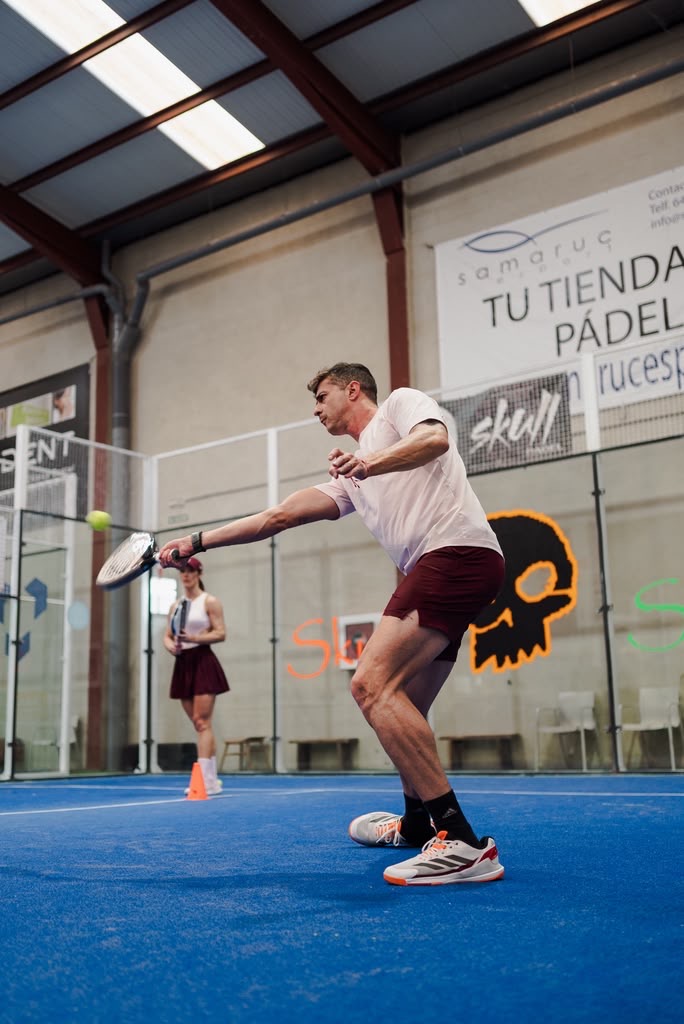
A tennis coach can teach beginner padel if they prepare properly and understand the sport’s specific demands. But tennis coaching experience alone is not proof of padel coaching competence. The useful distinction is not someone’s original sport: it is whether they can teach decisions involving the walls, court positioning and shot control. Padel Maestros describes a tennis coaching background as an asset, not a shortcut, and makes beginner teaching conditional on suitable preparation.
For a player booking lessons or a training holiday, that means looking beyond job titles. A coach should be able to explain not only how to strike the ball, but why a particular response suits a padel situation.
What a tennis coaching background brings
Tennis experience is relevant. In his discussion of coaches moving between sports, Sandy Farquharson identifies shot mechanics and strategy as valuable transferable skills, while emphasising padel’s distinct rhythm, court dynamics and tactical depth.
That is a reason to consider a tennis-trained coach, not automatically reject one. The important question is how they have adapted their knowledge. Ask them to explain a padel situation rather than simply describe their tennis experience.
For example, if you struggle with a ball travelling towards the back glass, the explanation should address the rebound and your decision about when to play it. An answer concerned only with your swing leaves part of the problem unresolved. You need help recognising the situation as well as executing the stroke.
Equally, a coach should not discard everything familiar simply because you are now playing another sport. The useful approach is to identify what already works, then make changes for a specific reason. “That is a tennis habit” is less informative than explaining what the habit does to your options on this court.
Where padel-specific coaching becomes essential
The walls make the distinction concrete. The LTA’s comparison of padel and tennis explains that wall rebounds are part of padel play. A ball can remain playable after bouncing and reaching the wall, so coaching must include more than the flight towards the first bounce.
A useful teaching task is to ask the coach to contrast taking a ball before the glass with allowing a rebound. Can they show you the difference, explain what you should watch and give you repeated attempts at recognising it? This tests the substance of the instruction without requiring you to judge the coach’s entire playing ability.
Power provides another revealing example. The same LTA guide notes that more powerful shots can return from the glass in a way that makes them easier for opponents to play. It emphasises control and precision, including keeping the rebound low. A harder shot is therefore not automatically a better outcome.
Feedback should reflect that distinction. Rather than praising pace alone, a coach can ask you to notice what ball your opponent receives after the rebound. This connects technique to its tactical purpose.
The differences also extend beyond individual strokes. Saber Mohamed’s comparison of tennis and padel coaching identifies movement, tactics, communication and court awareness as areas where coaching changes. A padel lesson should make room for those elements rather than treating every problem as a hitting error.
Can a tennis coach teach beginners or advanced players?
For beginners, the answer is a qualified yes. The qualification matters: the research supports properly prepared tennis coaches handling beginner sessions, not any tennis coach teaching padel without additional preparation.
A beginner still needs accurate padel instruction. For instance, the LTA explains that padel points start with an underarm serve struck after a bounce. Familiarity with tennis serving does not replace learning that action and its rules. The same principle applies when introducing the walls: start simply, but teach the actual sport.
For a more experienced player, beginner teaching competence is not enough evidence. Ask for an explanation of a problem at your current level. If your issue involves choosing between shots, the response should address the choice, not only provide a technical correction.
Avoid using a rating number as a universal benchmark. “Level 7” means little without naming the rating system. Describe what you can do reliably and where decisions become difficult; use the academy’s padel level test as a starting point for discussing an appropriate programme.
Coaching suitability and playing ability are also separate questions. A demonstration can help you understand a task, but it does not tell you whether the coach can diagnose your difficulty. Look for an explanation you can act on, followed by a chance to repeat the situation and receive feedback.
What this means for a padel coaching week
When planning a padel camp in Valencia, make your learning need specific. “I want better technique” gives less direction than “I can hit comfortably in practice, but I do not know when to use the rebound.” That distinction helps keep the week focused on padel rather than general racket skills.
The Ace Padel Academy follows Align, Calibrate, Execute: establish the objective, adjust the task to the player and practise applying it. Its approach is tactical-first, prioritising repetition and feedback over volume. A tactical masterclass is a relevant next programme to explore when decisions are your main concern.
For planning purposes, camp days start at 09:00 and padel sessions default to 90 minutes. A sensible week structure to discuss is morning coaching, a break, then afternoon application through practice or matches. Confirm the actual timetable rather than assuming every day follows that pattern. Matches against local players are the default; fitness is optional, with fitness sessions defaulting to 60 minutes.
FAQ
Does a tennis coaching qualification automatically qualify someone to teach padel?
Do not treat it as evidence of padel-specific preparation. It establishes a tennis background, but you still need to understand the coach’s padel training and experience. The supplied sources do not establish a universal certification rule, so check any formal requirements with the relevant provider or governing body.
Is a coach with a tennis background a bad choice?
No. Transferable knowledge can be useful. The issue is whether the coach has adapted it to padel’s walls, movement and tactical decisions. Judge the instruction they can provide now, rather than accepting or rejecting them because of where they started.
Should I take tennis lessons to improve my padel?
If padel is your main goal, seek instruction that directly addresses your padel problem. Tennis coaching may offer relevant expertise in shot mechanics, but it is not a substitute for learning wall play and padel-specific decisions. Explain your objective before committing to either type of lesson.
For more on this topic, read What Should I Ask a Padel Coach Before Hiring Them? and How Much Does a Padel Coach Cost?.
Book your padel week
Camps at The Ace Padel Academy start from 400 EUR per player. Send your playing background, coaching goals and preferred dates through WhatsApp to discuss a suitable week.
Related Program
Tactical Masterclass
Written by
The Ace Padel Academy